



The difference between calcium sulphate raised access floor and steel flooring
As electricity demand keeps growing and modern interiors need to stay clean and organized, raised flooring has become a common solution in offices, data centers, hospitals, and industrial plants. Among all raised floor types, the calcium sulphate raised access floor and steel flooring are two of the most widely used systems. They serve similar functions and overlap in many applications, which often confuses buyers when they compare quotations and technical sheets. This article explains the real differences between a calcium sulphate raised access floor and steel flooring from material structure, load capacity, fire resistance, sound insulation, environmental performance, cost, and application scenarios, so that procurement teams can choose the right system based on project conditions rather than price alone.
Key Takeaways
Calcium sulphate raised access floor uses a three-layer structure with a gypsum-based core, while steel flooring uses cold-rolled steel shells filled with foam cement.
Calcium sulphate panels generally provide better sound insulation and more stable pricing; steel panels usually cost less upfront but their price follows steel market fluctuations.
Both systems can be finished with HPL, PVC, ceramic, or anti-static veneers and can meet fire-resistant and anti-static requirements when specified.
Manufacturer data for calcium sulphate raised access floor reports more than 85% natural gypsum and plant fiber content with a recyclable rate of 90% to 97%, while the cement core of steel flooring is not recyclable.
Choose steel flooring for heavy-load, high-cabinet-density environments such as data centers, and choose calcium sulphate raised access floor for offices and projects that prioritize environmental performance, sound insulation, and stable long-term cost.
What Are Calcium Sulphate Raised Access Floor and Steel Flooring?
A calcium sulphate raised access floor is a composite access floor panel with a calcium sulphate substrate in the middle and veneers on the top and bottom surfaces. The substrate is made of natural gypsum and plant fiber, which are mixed, cured into calcium sulphate crystals, and pressed under high temperature to form a dense board. Common surface finishes include high-pressure laminate (HPL), PVC, ceramic tile, and anti-static laminates, while the panel edges are sealed to protect the core.
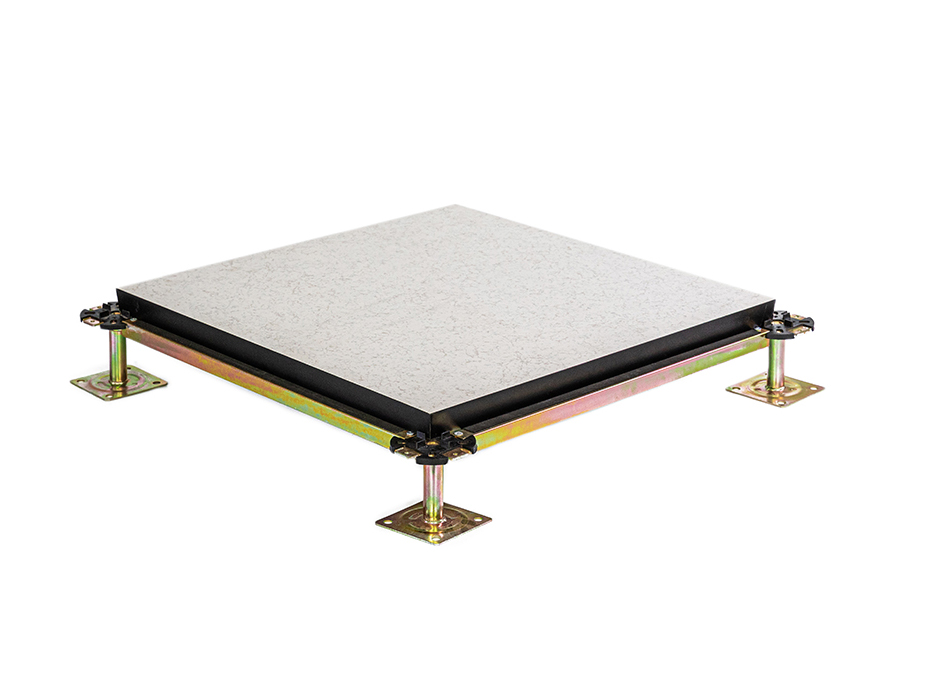
Steel flooring (also called all-steel raised floor) is built from a high-toughness cold-rolled steel base plate and a hard SPCC upper plate. The two steel sheets are stretched, punched, and welded into a shell, then treated with phosphating and spraying. The cavity inside the shell is filled with foam cement, which hardens into a stable load-bearing structure. Steel panels can be used as bare network flooring or covered with carpet, HPL, PVC, or tile veneers depending on the room type.
Material and Structural Differences
| Item | Calcium Sulphate Raised Access Floor | Steel Flooring |
|---|---|---|
| Core material | Calcium sulphate substrate made of natural gypsum and plant fiber | Foam cement filled inside cold-rolled steel shells |
| Structure | Three-layer: calcium sulphate core with top and bottom veneers | Two-piece steel shell (SPCC top plate and cold-rolled base) with cement fill |
| Surface options | HPL, PVC, ceramic, anti-static HPL, wood veneer | Carpet, HPL, PVC, anti-static laminate, tile |
| Edge treatment | Sealed edges, commonly black PVC edging | Phosphated and sprayed steel edges |
| Bare board use | Requires surface veneer for most applications | Can be used directly as network flooring |
Production Process Comparison
The production of a calcium sulphate raised access floor starts from mixing natural gypsum powder with plant fiber. After stirring and curing, the material solidifies into calcium sulphate crystals, which are then pressed and maintained for a long period to build a high-strength substrate. The cured board is cut, surface-treated, and laminated with the selected veneer; the underside is covered with aluminum foil or galvanized steel, and the four edges are sealed.
Steel flooring production begins with cold-rolled steel coils. The base and upper plates are formed by stretching and punching, then welded together, followed by phosphating and electrostatic spraying for corrosion resistance. Foam cement is poured into the shell cavity and cured into a stable core. Both processes are mature and standardized, but the calcium sulphate process is more dependent on curing time and moisture control, while the steel process is more dependent on welding quality and coating thickness.
Load Capacity and Weight
Load performance is usually the first item buyers compare. Typical ratings for a calcium sulphate raised access floor panel range from about 14.7 to 33.3 kN/m² uniform load and 300 to 680 kg concentrated load depending on panel grade, which covers most office and equipment room requirements. Steel flooring with cement-filled cores also provides high concentrated and uniform load ratings, which is why it is often specified for heavy cabinet areas.
Weight is a different story. A calcium sulphate raised access floor is among the heaviest raised floor panel types, so its transportation cost is generally higher. Steel panels are relatively lighter for the same footprint when the steel sheet is thin, but heavy-duty steel panels can also be quite heavy. Buyers should check the actual panel weight per square meter together with the logistics cost instead of assuming one system is always lighter.
Load and structural tests for both systems follow material and load testing standards[1] used across the raised floor industry, and installation and performance guidelines[2] published by the industry associations provide the basis for acceptance checks.
Fire Resistance and Anti-Static Performance
Both systems are available with Class A fire ratings. The gypsum core of a calcium sulphate raised access floor is naturally non-combustible and does not release toxic smoke under fire conditions, which makes it a common choice for public buildings and hospitals. Steel flooring combines steel shells with a cement core; the cement fill provides fire resistance while the steel shell stays dimensionally stable under heat. For anti-static requirements, both systems accept anti-static HPL or PVC veneers, and grounding kits can be connected through the pedestal system, so neither type has an automatic advantage in electrostatic control; the final performance depends on the specified veneer and grounding design.
Sound Insulation and Walking Comfort
Sound insulation is one of the clearest differences. During crystallization, the calcium sulphate substrate forms micropores, and the combination of its structural characteristics and high production precision gives a calcium sulphate raised access floor excellent sound insulation. It also provides good walking performance, with less hollow sound and a more solid feel underfoot, which creates a quieter and more comfortable working atmosphere.
The sound insulation of steel flooring depends mainly on the thickness of the steel sheet. When the sheet is thin, the panel can deform slightly under foot traffic and produce noise; thicker steel panels behave better but cost more and weigh more. For meeting rooms, quiet offices, and hospital wards, the calcium sulphate system is usually the easier path to a quiet environment.
Environmental Performance and Recycling
Sustainability is becoming a decisive factor in floor selection. Manufacturer data for a calcium sulphate raised access floor reports a natural gypsum and plant fiber content of more than 85%, and the materials can be naturally degraded with a recyclable rate of 90% to 97%. This helps projects meet green building requirements and end-of-life recycling targets.
For steel flooring, the main component is cement, which can account for up to 80% of the panel weight. Steel shells are recyclable, but the cement fill is not, and the two materials are difficult to separate at the end of service life. When the recyclable index is an important project criterion, the calcium sulphate system is generally preferred.
Price and Cost Stability
Initial price is where steel flooring usually wins. For the same specification, network or anti-static steel flooring is often priced much lower than a calcium sulphate raised access floor. However, steel prices fluctuate significantly, and the cost of steel panels follows the market closely, which makes long-term budgeting less predictable. The raw materials of calcium sulphate panels are comparatively stable, so their price remains more predictable over the project life cycle.
Buyers should compare total cost of ownership instead of the unit price alone: panel weight affects freight cost, surface finish affects maintenance, and panel life affects replacement cycles. A cheap panel that needs early replacement is rarely the economical choice.
Application Scenarios at a Glance
| Environment | Recommended System | Main Reason |
|---|---|---|
| Data centers and machine rooms | Steel flooring | High concentrated load ratings, high-density cabling, and easy panel access |
| Office buildings and reception areas | Calcium sulphate raised access floor | Quieter walking, better sound insulation, diverse veneers, stable cost |
| Hospitals and clean environments | Calcium sulphate raised access floor | Non-combustible core, easy cleaning, recyclable materials |
| Bank server and financial areas | Either system with anti-static veneer | Anti-static requirements are met by veneer and grounding design |
| Industrial plants with heavy equipment | Steel flooring (heavy-duty grade) | Higher load ratings and impact resistance |
How to Choose Between the Two Systems
The decision should start from the project brief, not from a single price sheet. Check the required uniform and concentrated load first, then confirm the fire rating and anti-static requirement, and finally compare logistics weight, sound insulation needs, and environmental targets. For data center environments[3] with heavy cabinets and frequent cabling changes, steel flooring is a practical choice. For offices, hospitals, and projects with green building goals, a calcium sulphate raised access floor provides a balanced combination of comfort, fire safety, environmental performance, and stable pricing.

Need Help Choosing the Right Access Floor?
HUATENG is a professional calcium sulphate raised access floor manufacturer with years of industry experience. We supply calcium sulphate and steel raised floor systems in various materials, specifications, and surface finishes, with full technical support and after-sales service. Contact us for professional consulting and customized solutions.
Conclusion
Both the calcium sulphate raised access floor and steel flooring are mature, reliable raised floor systems, and neither is universally better. The calcium sulphate system stands out for sound insulation, fire resistance, environmental recyclability, and stable pricing, while steel flooring stands out for competitive upfront cost and proven heavy-load performance in data centers. By comparing load ratings, weight, fire and anti-static requirements, environmental targets, and total cost, buyers can select the system that fits their project instead of following a default habit.
Frequently Asked Questions
Which is heavier, calcium sulphate raised access floor or steel flooring?
Calcium sulphate panels are among the heaviest raised floor panel types, so their transportation cost is generally higher than steel panels of the same size.
Is calcium sulphate raised access floor environmentally friendly?
Manufacturer data reports natural gypsum and plant fiber content above 85% with a recyclable rate of roughly 90% to 97%, which supports green building requirements. The cement core of steel flooring is not recyclable.
Which floor has better sound insulation?
Calcium sulphate panels form micropores during crystallization and provide consistent sound insulation. Steel flooring relies on steel sheet thickness, and thin panels may vibrate and produce noise under foot traffic.
Are steel floors cheaper than calcium sulphate raised access floors?
Steel flooring usually has a lower upfront price, but its price follows steel market fluctuations. Calcium sulphate raw material prices are comparatively stable over time.
Where is steel flooring most suitable?
Steel flooring suits heavy-load areas and high-density cabling environments such as data centers, machine rooms, and bank server areas, especially where high load ratings are required.
References
ASTM International. https://www.astm.org/
Ceilings & Interior Systems Construction Association (CISCA). https://www.cisca.org/
Uptime Institute. https://uptimeinstitute.com/
 CopyRight © 2026 - Changzhou Huateng Access Floor Co., LTDAll rights reserved