




What Is a Low Profile Raised Access Floor
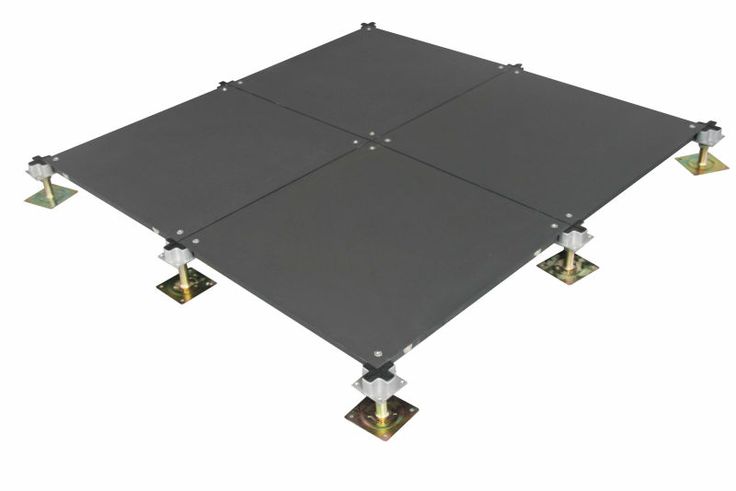
A low profile raised access floor is a modular flooring system designed primarily for cable, power, and low-voltage distribution that elevates the finished floor a minimal distance above the slab. While many products sit under roughly six inches in height, the professional way to specify these systems is performance-first: using EN 12825 or CISCA criteria for load, deflection, permanent set, rolling load, and safety factor. In other words, height is descriptive; performance is definitive. For introductory background on access floors overall, see the plain-language overview in the Huateng guide Raised Floor Systems Explained: The Ultimate Guide to Access Flooring Solutions in 2025.

Performance-first definition using EN 12825 and CISCA
Low profile raised access floors are selected by the loads they must carry and how they behave under test—rather than by nominal height. Two widely used frameworks guide that specification:
EN 12825 expresses performance with a code indicating ultimate load class, deflection class at working load, and a safety factor. Deflection classes include A with deflection at or under 2.5 mm at nominal load, B at or under 3.0 mm, and C at or under 4.0 mm. A concise industry explainer of EN 12825’s classes and notation is provided in Access-Flooring UK’s Understanding Raised Access Flooring Standards.
In North America, CISCA-referenced specifications define design concentrated load, limits for deflection and permanent set at that load, rolling load performance, and a safety factor separating working and ultimate loads. The U.S. government’s UFGS 09 69 13 Rigid Grid Access Flooring and the VA 09 69 00 Access Flooring specification show how many projects frame these requirements in practice.
For general context on “low profile” as less than six inches and why these systems emphasize cable access over airflow, see HUATENG’s definition in What Is a Raised Floor.
How low profile differs from traditional raised floors
Traditional raised floors are often designed to function as underfloor air plenums for HVAC distribution, in addition to cable routing. That use case requires adequate underfloor volume, careful sealing of penetrations, and coordination with mechanical design. Low profile systems, by contrast, create a shallow service void optimized for routing services; they are generally not intended to serve as true HVAC plenums.
Project specifications that do use the floor void as an air plenum call out air leakage control and sealing requirements. See the U.S. Department of Defense guidance in UFGS 09 69 13 Rigid Grid Access Flooring.
The U.S. Department of Veterans Affairs VA 09 69 00 Access Flooring specification similarly ties plenum behavior to mechanical requirements and structural performance.
The NIH Sustainable Data Center Design Guide notes deeper plenums help maintain uniform underfloor static pressure and reduce obstruction effects—an impractical expectation for very shallow voids.
In short, think of a low profile system as a shallow attic for cables, not a basement-sized HVAC plenum.

Components and finishes of low profile systems
A typical low profile assembly includes:
Modular panels that can be lifted to access services
Low-height supports or structural webbing that distributes loads
Optional stringers or integrated trenches for power and data routing
Transition ramps and perimeter edges to handle door thresholds and changes in level
Surface finishes such as carpet tile, VCT, HPL/laminate, linoleum, or rubber
For anti-static applications, pair dissipative or conductive finishes with a verified grounding path bonded to building ground, then validate performance per the facility’s ESD control program. For a practical walkthrough of grounding concepts, see Huateng’s article Why Proper Grounding of Anti-static Raised Floors Can Save Facilities Thousands in Equipment Damage.
Interpreting load and deflection specs with examples
Here’s how to read the two common specification languages in plain terms:
EN 12825: choose a target ultimate load class that meets your heaviest expected point load; pick a deflection class that limits flex at the working load; state the safety factor connecting working to ultimate. Example notation “3 A 3 2” indicates a Class 3 ultimate load, deflection class A, system class 3, safety factor 2. A clear overview of the notation is available via Access-Flooring UK’s standards explainer.
CISCA-referenced specs: define a design concentrated load in pounds, set maximum deflection at that load, limit permanent set after unloading, and specify rolling load performance by wheel load and number of passes along defined paths. Include the safety factor from working to ultimate. See UFGS 09 69 13 and VA 09 69 00 for typical framing.
The table below maps common spaces to typical performance language you can adapt. Always verify with manufacturer test data and an engineer of record.
| Space type | Primary concern | EN 12825 target example | CISCA-style target example |
| Open office with cable management | Foot traffic and furniture | Mid-range ultimate load with deflection class B or A for firmer feel | Design concentrated load around light-to-moderate categories with tight deflection limit |
| AV-heavy conference or training room | Equipment carts and frequent reconfiguration | Higher deflection control, consider class A | Moderate-to-higher rolling load passes with durable finish |
| Command or control center | Frequent dollies and heavier consoles | Higher ultimate class with class A deflection | Higher rolling load cycles with conservative permanent set limit |
| IDF or branch server room without plenum | Static point loads from racks and cabinets | Higher ultimate class and strict deflection control | Higher design concentrated load with safety factor and ESD-compatible finish |
Application matrix for low profile raised access floor selection
Use this 2×2 to orient options fast. The X-axis represents static plus rolling load rating from light to heavy. The Y-axis represents finish system from standard commercial to ESD-disciplined assemblies. Place your project in the quadrant that best matches its reality, then refine by test data and submittals.

Examples by quadrant:
Open-plan office cable management: light to medium loads with a standard carpet tile finish where quick reconfiguration matters more than heavy rolling cycles. For office-focused tips, see Huateng’s guide 7 Essential Tips for Picking the Perfect Office Raised Access Floor.
AV-heavy conference rooms: medium loads with a durable surface like HPL or commercial carpet tiles; moderate rolling cycles from presentation carts. For broader system selection context, see Which Raised Access Flooring System Is Right for You in 2025.
Command centers with frequent dollies: higher rolling loads and pass counts; emphasize panel stiffness and finish durability.
IDF or branch server rooms without underfloor air: higher static loads and ESD-disciplined finishes with a verified grounding path.
Retrofit and installation considerations
Door thresholds and ramps: confirm door clearances and design ADA-compliant transitions with appropriate slope geometry.
Cable routing discipline: respect bend radius for power and data, coordinate box locations, and use perimeter blocking or draft stops where the design calls for them.
Fire and penetrations: seal penetrations as specified; when the void is not a plenum, limit combustible load and follow local code coordination.
Seismic and lateral stability: in seismic zones, consult the manufacturer about bracing or restraint hardware and reference local requirements.
Maintenance planning: select finishes and panel constructions that tolerate expected lift frequencies and rolling traffic without excessive wear.
Limitations and alternatives
A low profile raised access floor is not the right tool when you need a true HVAC plenum, tall service voids, or very heavy point loads and high rolling loads typical of dense data hall aisles. In these cases, consider higher-performance conventional systems and heavier-duty panel materials. For a sense of heavy-duty options, review Huateng’s Calcium Sulphate category for reference examples and performance ranges.
Next steps
If you’re drafting a specification, start by writing the performance sentence, not the height: name the design concentrated load, maximum deflection and permanent set, rolling load criteria, safety factor, and any ESD and finish requirements. Then request current test certificates and submittals from shortlisted manufacturers, and validate with your engineer of record.
Disclosure: Changzhou Huateng Access Floor Co., LTD is our product source. For fundamentals and selection guidance, explore these resources in the Huateng library:
Raised Floor Systems Explained: The Ultimate Guide to Access Flooring Solutions in 2025
Why Proper Grounding of Anti-static Raised Floors Can Save Facilities Thousands in Equipment Damage
Frequently asked questions
Is a low profile floor a plenum?
Generally no. Shallow voids limit airflow and pressure balance. When a project requires underfloor air distribution, specifications like UFGS 09 69 13 and VA 09 69 00 add sealing and testing requirements that low profile systems are not typically designed to fulfill.
Can I use low profile systems in seismic zones?
Often yes, with manufacturer-approved bracing or restraint accessories and compliance with local code. Engage the vendor and a structural engineer early to align details.
How do rolling loads relate to real-world use?
CISCA-referenced criteria translate into wheel loads and pass counts along specified paths. If you expect frequent trolley or dolly movements, prioritize higher rolling load ratings and verify permanent set limits after cycling. See UFGS 09 69 13 for example framing.
What finished floor heights are common?
Manufacturers offer a range of shallow assemblies often under about six inches. Treat those numbers as context only; choose your system by tested performance under EN 12825 or CISCA rather than by height. For a plain-language definition, see Huateng’s What Is a Raised Floor.
 CopyRight © 2026 - Changzhou Huateng Access Floor Co., LTDAll rights reserved