




7 Essential Tips for Picking the Perfect Office Raised Access Floor
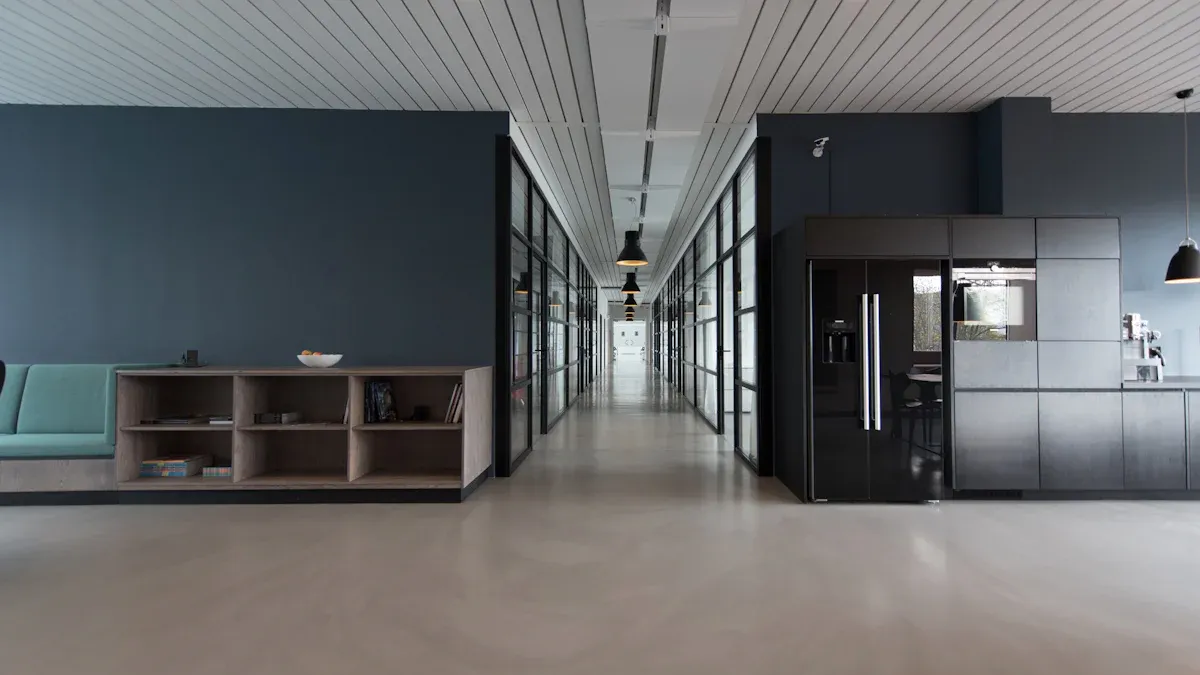
Image Source: unsplash
Choosing the right office raised access floor improves both efficiency and safety in any workspace. Studies show that a raised access floor system enhances cooling, reduces trip hazards, and supports flexible layouts. Companies that work with a reliable access flooring company benefit from better cable management, easier maintenance, and surfaces that resist slips and stains. An access flooring company can help tailor a raised access floor system to specific load and environmental needs, ensuring long-term productivity for every office.
Key Takeaways
Assess your office needs carefully to choose the right floor height, materials, and load capacity that fit your workspace and future growth.
Select a raised access floor height that balances cable management, airflow, and space limits to keep your office comfortable and efficient.
Choose floor materials and panels that match your load requirements and environment for durability, safety, and easy maintenance.
Pick finishes like carpet or vinyl tiles that combine style, durability, and moisture resistance to keep your office floor looking great and lasting long.
Prioritize safety by selecting fire-resistant, low-emission, and sustainable floor systems that support a healthy and eco-friendly workspace.
Assess Office Needs
Choosing the right raised access floor starts with a clear understanding of the workspace. Every office has unique requirements, and a careful assessment ensures the raised access floor system will support daily operations, safety, and future changes.
Space and Layout
Different workspaces benefit from raised access floors in specific ways.
Data centers and control rooms need efficient cable management and cooling.
Open-plan offices use raised access floors to keep cables hidden and allow for easy reconfiguration.
Call centers and retail spaces require organized wiring for many devices.
The type of space determines the best floor height, materials, and finishes. Offices with frequent layout changes should select modular panels for flexibility. Panel materials, such as steel or woodcore, must match the environment’s needs. Offices in areas with moisture or seismic activity may need special materials or extra support.
Tip: Plan for future growth by choosing a raised access floor that allows easy relocation of outlets and cables.
Load Requirements
Load capacity is a key factor in selecting a raised access floor.
Standard office areas usually need panels that support 1,000 to 1,500 pounds.
Spaces with heavy equipment, like server rooms, may require panels rated up to 2,500 pounds.
Seismically active regions might need extra pedestals or stringers for added stability.
Always check the load-bearing capability, crush strength, and rolling test ratings. Selecting the right panel ensures the floor can handle both foot traffic and equipment without risk.
Cable Management
Effective cable management keeps the office safe and organized. Raised access floors provide a secure, concealed space for cables, reducing tripping hazards and fire risks.
Cable trays under the floor organize power and network cables, making maintenance easier.
Bundling cables with wraps or Velcro keeps them neat, but planning for future changes is important.
Routing cables under the floor improves airflow and extends equipment life.
Regular inspection and proper installation prevent cable damage. Offices should choose cable management tools that fit their needs, such as trays or trunking, to optimize organization and safety.
Choose Raised Access Floor Height
Selecting the right height for a raised access floor system shapes the workspace’s flexibility, comfort, and efficiency. The correct height supports airflow, cable management, and equipment needs while fitting within the building’s physical limits.
Low Profile Options
Low profile access floor systems offer a practical solution for modern offices. These floors, often between 1.5 and 6 inches high, allow for cable management without reducing ceiling height. Many offices choose low profile access floor designs because they install quickly and cost less than traditional systems.
Feature | Low Profile Raised Floor | Traditional Raised Floor |
|---|---|---|
Installation Speed | Slower, labor-intensive | |
Installation Complexity | Simple, no special tools needed | Requires specialists |
Labor Cost | Lower | Higher |
Cable Requirements | Non-plenum rated cabling allowed | Plenum rated cabling needed |
Concrete Work | None | Trenching/coring required |
Reconfiguration & Maintenance | Easy, by onsite personnel | Difficult, needs contractors |
Overall Cost Savings | Significant | Lower |
Note: Low profile access floor systems minimize disruption, support plug-and-play power, and make future changes easy.
Airflow and Cabling
Raised access floor height directly affects airflow and cabling capacity. Higher floors, such as those in server rooms, provide more space for cooling and large cable bundles. Offices with high-density equipment or underfloor air distribution need more height to maintain efficient airflow and prevent overheating. Raised floors also help keep cables organized and hidden, supporting flexible office layouts and clean aesthetics.
Raised floors deliver cooled air under the panels, improving circulation.
Modular grid designs allow easy cabling changes and support new equipment.
Proper height selection ensures both airflow and cable management remain efficient.
Space Limitations
Space constraints often guide the choice of raised access floor height. In existing office buildings, reducing floor-to-ceiling height is a major concern. Traditional raised floors can take up a foot or more, which may not work in spaces with low ceilings. Low profile access floor systems solve this problem by providing cable management in a much thinner layer.
Space Type | Recommended Raised Access Floor Height | Primary Purpose and Considerations |
|---|---|---|
Server Room | Airflow, cabling, cooling, heavy equipment | |
Open-Plan Office | 4–6 in. (under 3 in. for low profile) | Cable management, power/data/HVAC, light equipment |
Laboratory | 6–12 in. or higher | Specialized air, lab equipment |
Early planning helps balance the need for underfloor space with ceiling height limits. Choosing the right office raised access floor height ensures the workspace remains comfortable, safe, and ready for future changes.
Select Floor Materials
Choosing the right floor material is a critical step in building a safe and efficient office. Each material offers unique strengths for different environments. The table below highlights the most common materials and their advantages:
Material | Advantages |
|---|---|
Concrete | Strong and durable; suitable for heavy loads and high-traffic areas; fire resistant; reduces noise. |
Steel | High strength; excellent fire resistance; used in secure environments; requires maintenance to prevent corrosion. |
Aluminium | Lightweight; corrosion resistant; easy to install and maintain; ideal for weight-sensitive areas; less strong than steel or concrete. |
Advanced Composites (GRP) | Lightweight yet strong; corrosion, moisture, and chemical resistant; thermally and electrically non-conductive; excellent fire safety; design flexibility; easy to modify and install with hand tools. |
Steel Panels
Steel panels stand out for their durability and strength. Offices with heavy equipment or high foot traffic often choose steel panels for their raised access floor systems.
Steel panels support heavy machinery, servers, and rolling equipment without warping or failing.
They resist scratches, dents, and wear, which keeps maintenance costs low.
Steel panels perform well in humid or temperature-changing environments due to their corrosion resistance.
These panels last for years and provide a stable base for power cables and cooling ducts.
Tip: Steel panels work best in data centers, server rooms, and busy commercial spaces where load capacity and long-term performance matter most.
OA Floor Panels
OA (Office Automation) floor panels are designed for modern office needs.
They organize heavy wires and cables, making cable management simple and safe.
OA panels allow for quick installation and easy removal, which helps during upgrades or repairs.
The corner lock system creates a stable floor without extra supports, handling typical office loads with ease.
OA panels separate strong and weak electrical currents, supporting a variety of office devices and plug sockets.
These features make OA floor panels a smart choice for flexible office layouts that require frequent changes.
Other Materials
Offices can also consider alternative materials for their raised access floor. Options include wood, calcium sulfate, aluminum, and advanced composites. Each material offers different benefits and costs:
Material | Performance Highlights | |
|---|---|---|
Steel | $15 - $30 | Durable, fireproof, high load capacity, prone to denting |
Calcium Sulfate | $10 - $25 | Lightweight, fire resistant, low cost, office use |
Wood/Plywood | $15 - $35 | Good value, impact resistant, fire and moisture risk |
Aluminum | $25 - $40 | Lightweight, corrosion resistant, suited for clean rooms |
Concrete | $30 - $50 | Very durable, fireproof, heavy, industrial use |
Plastic Composites | $5 - $15 | Lightweight, prone to sagging over time |
Ceramic/Porcelain | $30 - $60+ | High-end finish, expensive, heavy, prone to cracking |
Some offices use magnesium oxide panels for their lightweight, fire resistance, and environmental benefits. The right material depends on the office’s needs, budget, and performance goals.
Check Load Capacity
Choosing the correct load capacity for a raised access floor protects both people and equipment. Offices must match the floor system’s strength to their daily needs. Industry standards group raised floors by duty category, which helps guide the right choice for each workspace.
Duty Category | Typical Application | Load Capacity Range (psf) | Panel Materials | Pedestal Spacing Characteristics |
|---|---|---|---|---|
Light Duty | Office environments | 250 - 500 | Wood or Aluminum | Narrower spacing |
Medium Duty | Moderate foot traffic | 500 - 1,000 | Steel or Aluminum | Slightly wider spacing |
Heavy Duty | Heavy equipment areas | 1,000 - 2,500 | Steel | Wider spacing |
Extra Heavy Duty | Data centers, industrial | > 2,500 | Reinforced Steel | Widest spacing |
Offices should always confirm that the chosen floor system meets or exceeds the expected load. This prevents damage and ensures long-term safety.
Static Loads
Static load ratings define how much weight a floor panel can support without permanent damage. These ratings include concentrated load, uniform load, and ultimate load. Each type affects how and where equipment can be placed.
Load Type | Definition | Relevance to Office Equipment Placement and Safety |
|---|---|---|
Concentrated Load | Maximum point load a floor panel can bear without failure or excessive deflection. | Important for placing heavy equipment on small floor areas to avoid panel damage or collapse. |
Uniform Load | Maximum evenly distributed load the floor can support without permanent deformation or failure. | Guides overall load capacity for furniture and equipment spread across the floor, ensuring no excessive deflection or damage. |
Ultimate Load | Maximum load before catastrophic failure, including safety margin (factor of safety applied). | Ensures safety margins for unexpected overloads, preventing structural failure and maintaining safety under extreme conditions. |
Static load ratings help offices avoid overloading panels. Heavy printers, safes, or server racks should always sit on panels rated for concentrated loads. Uniform load ratings guide the safe placement of desks and chairs across the workspace. Ultimate load ratings add a safety margin for unexpected events.
Rolling Loads
Rolling loads measure how much weight a floor can handle when equipment moves across it. High-traffic offices often use carts, trolleys, or rolling chairs. Raised floors must support these repeated movements without damage.
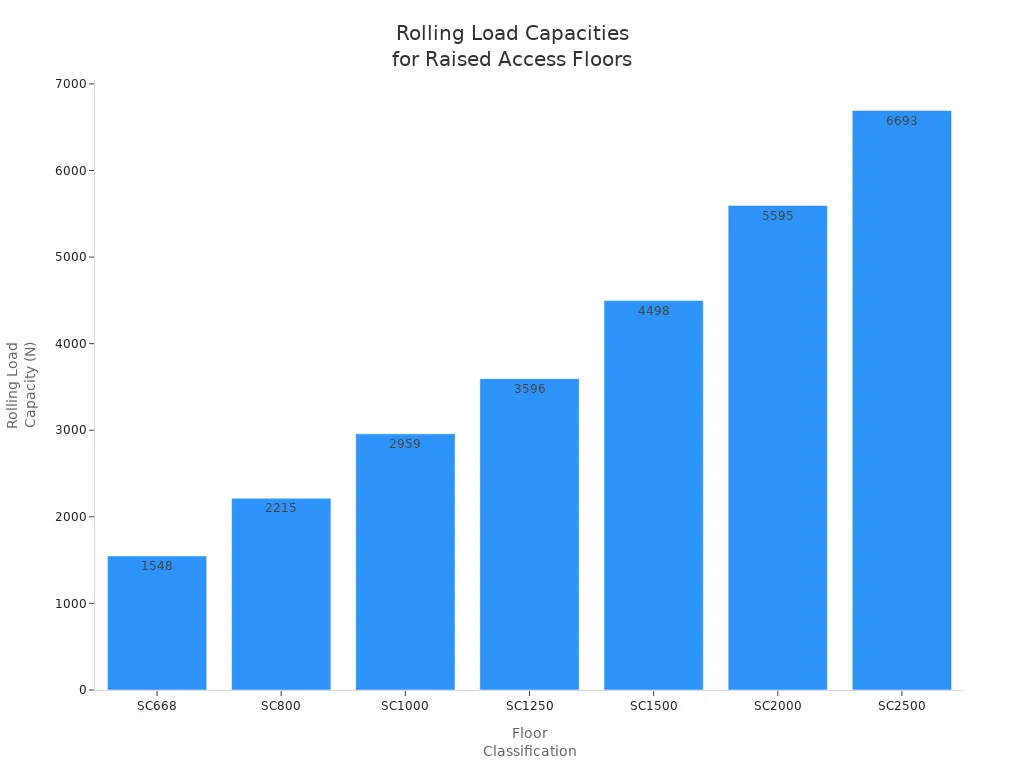
Aluminum raised floor systems in busy offices typically support rolling loads of about 1000 lbs (around 4448 N). This capacity suits heavy caster traffic and frequent rolling loads. The chart below shows rolling load capacities for different floor classifications:
Tip: Always check rolling load ratings before moving heavy equipment on wheels. This prevents panel cracks and extends the floor’s lifespan.
Proper load capacity selection ensures the raised access floor remains safe, stable, and reliable for years of office use.
Focus on Finish and Aesthetics
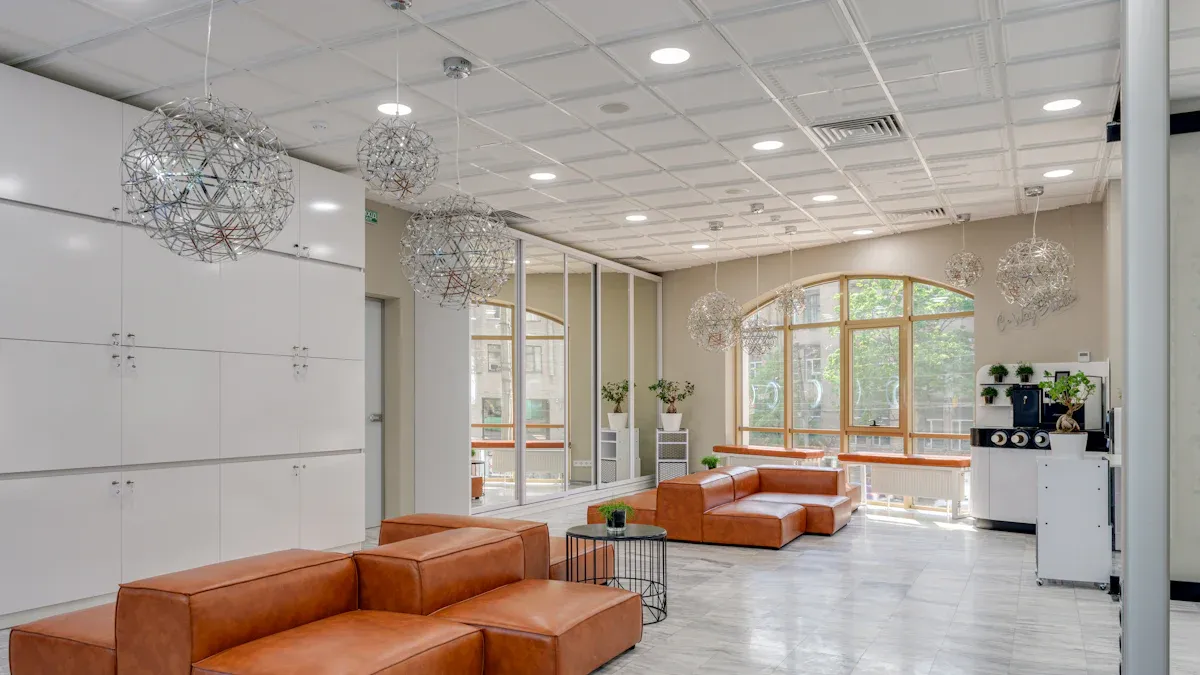
Image Source: pexels
Selecting the right finish for a raised access floor shapes both the look and long-term performance of an office. Finish options like carpet tiles and vinyl tiles allow offices to match their brand identity while supporting easy maintenance. Durable and eco-friendly finishesreduce upkeep and support sustainability goals. Offices benefit from finishes that combine style, durability, and practicality.
Carpet Tiles
Carpet tiles remain a popular choice for office raised access floors. They offer a clean, professional appearance and help conceal wires and systems beneath the floor. Offices choose carpet tiles for several reasons:
Easy removal and replacement support quick access to cables and infrastructure.
High durability suits busy office areas and resists indentations from furniture.
Soil-resistant technology keeps floors looking clean.
Flexible design allows for fast replacement of stained or damaged tiles.
Tip: Carpet tiles with a stiff backing and at least 4mm thickness provide the best durability for raised floors. Using glue dots or tape makes tiles easy to lift for maintenance.
Carpet tiles also support frequent office reorganization. They help maintain a neat and uncluttered workspace.
Vinyl Tiles
Vinyl tiles deliver strong durability and easy cleaning. Offices with high foot traffic or data centers often select vinyl finishes. Vinyl tiles resist moisture better than wood and clean up quickly. Luxury Vinyl Tile (LVT) stands out for its scratch resistance and antimicrobial properties, making it a hygienic choice.
Vinyl reduces noise from footsteps, creating a quieter office.
Sheet vinyl offers seamless installation, blocking moisture and bacteria.
Compared to carpet, vinyl is easier to maintain and less sensitive to spills.
Vinyl finishes combine design flexibility with practical benefits, supporting both aesthetics and daily use.
Moisture and Deformation Resistance
Moisture and deformation resistance are critical for long-lasting raised access floors. Offices in humid environments need finishes that prevent warping and bulging. Magnesium sulfate and calcium sulfate floors resist corrosion and maintain flatness under pressure. These materials do not rust or blister, reducing maintenance needs.
Calcium sulfate floors perform well in humid conditions and resist water vapor.
High stability and non-deformable surfaces lower replacement costs.
Maintaining humidity below 80% during installation helps ensure floor stability.
Choosing finishes with strong moisture and deformation resistance ensures office floors stay safe, flat, and attractive for years.
Prioritize Safety and Environment

Image Source: pexels
Fire Resistance
Fire safety stands as a top priority when selecting office raised access floors. Floors with high fire resistance slow the spread of flames and protect both people and equipment. Commercial office buildings require Class A or Class B fire resistance ratings. Class A offers the highest level of protection, while Class B still provides strong defense.
Building Type | Required Fire Resistance Ratings | Description of Ratings |
|---|---|---|
Commercial Office Buildings | Class A or Class B | Class A: Highest fire resistance, slows fire spread. |
Calcium sulfate floors deliver excellent fire resistance and suit safety-critical areas. Steel-core and aluminum floors also provide strong protection and durability. Choosing the right material ensures compliance with safety codes and reduces risk in emergencies.
Note: Concealed cables under raised floors also reduce tripping hazards and support a safer environment.
Low Emissions
Low-emission materials help create healthier office spaces. Raised access floors with low VOC (volatile organic compound) content improve indoor air quality. These floors limit chemical pollutants that can cause irritation or long-term health problems. UL GREENGUARD certified products meet strict emission standards and support a safer workplace.
Raised floors also support underfloor air distribution systems. These systems deliver fresh air directly to the occupied zone, reducing pollutant mixing and mold growth. Using low-emission panels, such as MDI-bonded straw particleboard, further lowers VOC levels and supports employee well-being.
Sustainability
Sustainable raised access floors support green building goals and reduce environmental impact. Many systems use recycled materials and can be recycled at the end of their life. Modular designs allow for easy reconfiguration, which cuts down on waste during renovations.
Raised floors combined with underfloor air distribution can lower HVAC energy use by up to 30%.
Modular systems use up to 75% fewer building materials during installation.
These floors help offices achieve LEED and WELL certifications by improving energy efficiency, indoor air quality, and material sustainability.
ISO 9001 and ISO 14001 certifications show that manufacturers follow best practices for quality and environmental management. Choosing sustainable raised access floors creates a flexible, efficient, and responsible workspace.
A well-chosen office raised access floor system transforms any workspace by improving efficiency, safety, and flexibility. Industry experts highlight these seven essential tips:
Raised access floor systems manage cables and building systems efficiently.
They improve acoustic quality and support quiet HVAC systems.
These floors enhance thermal comfort and reduce electricity costs.
Custom finishes hide cables and match office decor.
Sustainable materials help meet environmental goals.
Indoor air quality improves with advanced HVAC integration.
Raised floors allow quick upgrades and workspace changes.
An access flooring company provides expert advice on material selection, load requirements, and access floor installation. Their knowledge ensures the raised access floor system meets all safety and performance standards. For the best results, companies should partner with a trusted access flooring company to design, supply, and maintain their raised access floor system. This approach guarantees a workspace that adapts to future needs and supports long-term success.
FAQ
What is the typical lifespan of a raised access floor system?
Most raised access floor systems last 20 to 25 years with proper care. Regular inspections and prompt repairs help extend the floor’s service life.
Can a raised access floor be installed in an existing office?
Yes. Raised access floors can fit into most existing offices. Low profile systems work well in spaces with limited ceiling height.
How often should maintenance be performed on raised access floors?
Experts recommend checking panels and supports every 6 to 12 months. Quick inspections help spot loose tiles, damaged finishes, or cable issues early.
Are raised access floors suitable for areas with high humidity?
Raised access floors with calcium sulfate or aluminum panels resist moisture well. Offices in humid regions should select materials designed for water resistance.
 CopyRight © 2026 - Changzhou Huateng Access Floor Co., LTDAll rights reserved