




Step-by-Step Guide to Selecting the Ideal Raised Floor Height

Image Source: pexels
For most office and data center jobs, you often need an access floor that is 6 to 18 inches high. Picking the right raised floor height helps your space in many ways. You can save money on building and running things. It also makes cabling easier and helps air move better. Many case studies show that the best raised floor system lets you reach wiring and HVAC more easily. It also cuts down on work time and helps you change layouts when needed. When you plan, think about airflow, equipment, and cabling. This will help your access floor work as well as possible.
Key Takeaways
Pick a raised floor height that matches your space. Think about your equipment and airflow needs too. This helps you save time, money, and energy. Higher floors are best for data centers and heavy equipment. Low-profile floors are good for offices with fewer cables. They also work well in rooms with low ceilings. Plan where cables will go and how air will move. This keeps equipment cool and makes fixing things easier. Check building limits like ceiling height and ramp slopes first. Do this before you choose your floor system. Always look over your floor plan with experts and others. This helps you avoid mistakes and keeps things flexible for the future.
Raised Floor Height Basics
Image Source: pexels
Typical Ranges
It is important to pick the right raised floor height early. The right height helps your equipment work well. It also lets air move better and makes cables easier to handle. Most offices, data centers, and labs use a raised floor that meets industry rules. The table below shows what heights are common for each type of place:
Industry/Application | Duty Level | Typical Raised Floor Height Range | Notes |
Offices | Light Duty | 4 to 6 inches | Good for low-density environments |
Data Centers | Medium Duty | 6 to 12 inches | Handles moderate equipment loads |
Data Centers | Heavy Duty | 12 inches or more | Needed for high-density equipment |
Laboratories | N/A | Customizable, often aluminum panels | Heights vary, sometimes higher for air distribution |
You can pick from different types of floors. A low-profile raised floor is under 3 inches high. It is good for old buildings and simple cable jobs. A standard raised floor is 6 to 12 inches high. This works for most uses. Full-height systems are 24 inches or more. These are best for big pipes and moving air under the floor.
Key Factors
There are many things to think about when you pick a raised floor. The most important things are:
Underfloor airflow needs. Data centers may need a raised floor that is 24 inches or higher for good air flow.
Cable volume and size. Offices with simple cable needs can use a low-profile raised floor, sometimes as low as 2 inches.
Room height limits. The ceiling in your room may limit how high your floor can be.
Intended use. If you need air conditioning, you may need a higher floor than if you only need cable space.
Compliance with green building standards. LEED and WELL rules can change your design.
Flexibility for future changes. Modular systems and adjustable pedestals help you change your floor later if needed.
Equipment weight. Heavy servers or lab machines need a strong floor with the right height.
Installation speed and cost. If you want to save time and money, you might pick a low-profile raised floor.
Tip: Always check what your project needs before you decide. The right raised floor system saves you time, money, and energy. For the best results, pick a trusted raised access floor supplier, HUATENG.
How High Should Your Access Floor Be

Image Source: pexels
Picking the right raised floor height is very important. It helps your space work well and stay flexible. You should choose a height that fits your needs. Do not just use the same height as everyone else. Think about what kind of space you have. Think about what you need the floor to do. Also, think about how you will handle air and cables. This part will help you decide how high your access floor should be.
Space Type
The kind of space you have changes what floor you need. Server rooms and data centers need taller floors than offices. These places need more room for cooling and heavy things. They also need space for lots of cables. Offices care more about being easy to change and sharing services.
Space Type | Recommended Raised Floor Height | Primary Purpose and Considerations |
Server Room | 12-24 inches (typical), up to 36 inches for high-density/hyperscale | Supports airflow management, advanced cabling, cooling efficiency, and heavy equipment load. |
Open-Plan Office | 4-6 inches (low-profile raised floor possible) | Mainly for cable management and distribution of power, voice, data, and HVAC services. |
Laboratory | Customizable, often 6-12 inches or higher | Allows for specialized air distribution and equipment support. |
Pick a raised floor that fits your space. A low-profile raised floor is good for offices. It hides cables but does not raise the floor much. Data centers need higher floors for cooling and heavy racks.
Note: If you want to add more equipment later, pick a floor height that can handle it. This will save you money and trouble in the future.
Functional Needs
What you need the floor to do changes the height you pick. Think about how heavy your equipment is. Think about how easy you want it to be to reach things under the floor. Also, think about what you want to run under the floor.
Description | Impact on Raised Floor Height and Design | |
Concentrated Load | Heavy equipment on a single panel | Requires strong panels and possibly higher floor |
Rolling Load | Moving equipment (e.g., server racks on wheels) | Needs stable, reinforced floor system |
Vibration Load | Machinery vibrations | Demands vibration-resistant design |
Impact Load | Sudden forces | Influences material choice and thickness |
Seismic Load | Earthquake resistance | Requires seismic-grade raised floor system |
Think about how you will handle cables. If you need to change cables a lot, a low-profile raised floor with cable paths is helpful. It saves space and makes fixing things easier. For heavy things or lots of cables, a taller floor gives you more room and support.
You need a taller floor for more cables or heavy things.
It is easier to reach wires and fix things with a higher floor.
Low-profile raised floors are best for offices with few cables and light equipment.
Airflow and Cabling
Good airflow and neat cables are very important in data centers. The height of the raised floor changes how well air moves and how you handle cables. If you do not leave enough space, your equipment can get too hot. It can also be hard to fix things.
Studies show that underfloor air systems send air right where people need it. This makes the room feel better and saves energy. The right floor height helps air move well and keeps the room cool. In data centers, a floor between 18 and 30 inches is best for cables and air. If you use a low-profile raised floor, you might need to put cables above the floor. This keeps air moving under the floor.
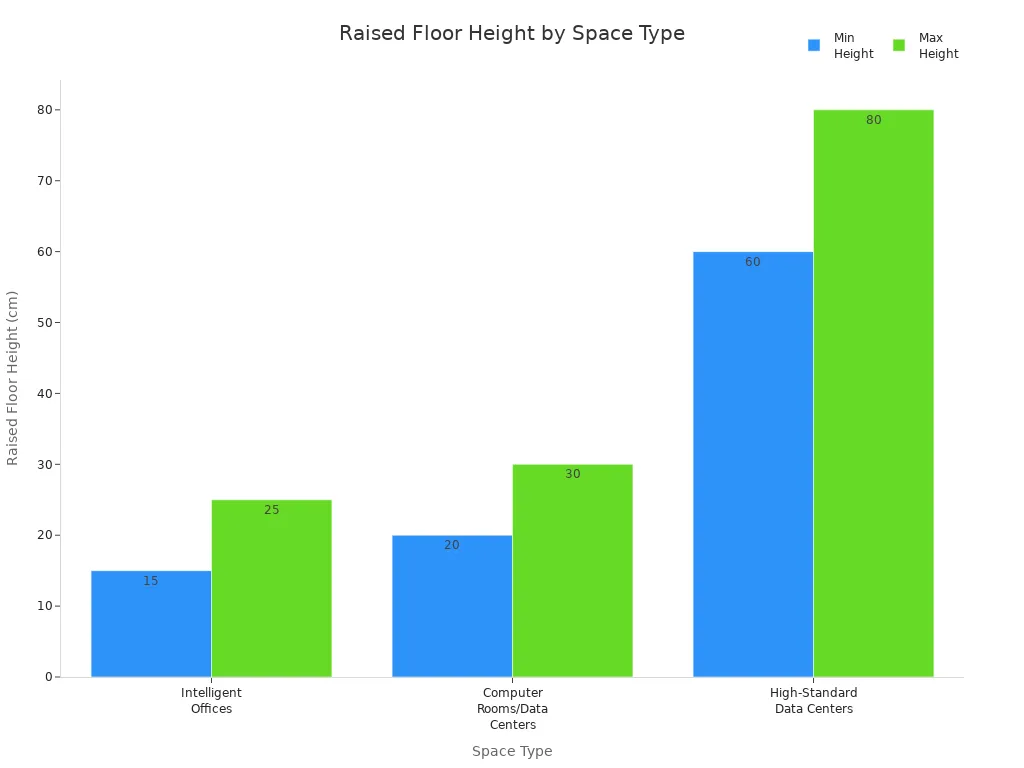
Some good ways to handle cables are:
Plan where cables go so they do not block air.
Use cable systems you can change and label cables.
Tip: Always make sure you have enough space for both cables and air. If your floor is not high enough, put cables above the floor to help cooling.
Raised Floor System Selection
Special Requirements
You need to pick a raised floor system that fits your building’s needs. If you have heavy equipment, use steel or concrete panels. These panels are strong and keep the floor steady. In data centers or labs, airflow is very important. Use panels with holes or grates to let cool air reach your machines. Adjustable pedestals help you set the right height and keep the floor flat.
Some places need extra features. If you live where earthquakes happen, you need seismic resistance. You must follow rules for earthquake safety, especially in strict buildings. Static control is also important for electronics. Pick floor materials that lower static electricity. This choice can change your floor’s design and height.
Rules and standards help you make choices. You must meet fire safety, ADA access, and green building rules like LEED. For example, ADA rules say how high ramps and access points must be. Always check local rules and industry standards before you choose.
Tip: Plan your raised floor system so you can change it later. Modular panels and adjustable heights make upgrades simple.
Constraints
Physical limits affect your raised floor system choices. Ceiling height is a big factor. In new buildings, you can use floors with 6 inches or more of space. This space fits HVAC, cables, and air. In old buildings or offices with low ceilings, use low-profile floors. These give 2 to 6 inches of space and are good for cables.
You also need to think about ramp slopes for access. ADA ramps need a 1:12 slope. For every inch up, you need 12 inches across. In small spaces, you can use steeper ramps, but always check local rules. Add landings and handrails for safety if your ramp is long or high.
Constraint | Impact on Raised Floor System Selection |
Ceiling Height | Limits how high your floor and underfloor space can be |
Existing Infrastructure | May need low-profile floors for old buildings |
Ramp Slope | Decides ramp length and access features |
Door and Window Placement | Changes panel layout and access spots |
You should always check your floor plan with experts. This makes sure your raised floor system meets all height rules, safety codes, and future needs. For the best results, pick a trusted raised access floor supplier, HUATENG.
Final Steps
Review with Stakeholders
You should always check your raised access floor plan with everyone important before you decide. This helps you not make expensive mistakes and makes sure your project works for everyone. Bring together your architects, IT managers, facility teams, and contractors. Each group can find different problems, like airflow, cable paths, or heavy equipment.
Talking to raised floor system experts is very helpful. Experts help you fix hard problems, like uneven floors or special things like built-in lights. They can change the floor height to fit pipes or building details. When you work with experts, you get a better install and your floor lasts longer. You also avoid mistakes, like picking a floor height that is too low or too high.
Tip: Always use a test or model for big projects. This lets you try the floor height and see if it works for your equipment and future needs.
Checklist
A simple checklist helps you finish your raised access floor height and not make mistakes. Use this list to help you plan and put in your floor:
Assess Your Needs: Look at your space, equipment, and plans to grow.
Prepare the Subfloor: Make sure the subfloor is flat and strong.
Select the System: Pick the right raised access floor type, under-structure, and panel finish.
Decide on Height: Choose the finished floor height for airflow, cables, and equipment.
Plan Cable Management: Leave enough space for cables and other things.
Install Pedestals and Panels: Put in pedestals and then panels so the floor is even.
Add Finishing Touches: Lock panels in place and add ramps or static control if needed.
Review with Stakeholders: Check all choices with your team and experts.
Common mistakes are not thinking about what you really need, picking a height just to save money, or copying others without checking your needs. Avoid these by using this checklist and talking to professionals.
For the best results, pick a trusted raised access floor supplier like HUATENG to help you from start to finish.
Picking the right raised access floor height helps your project work well. First, make sure the floor height fits your cables, air flow, and equipment. Use a simple checklist to check load strength, access, and if you might need changes later.
Raised access floor height is based on cable paths, air under the floor, and easy repairs.
The right height lets the floor hold heavy things and keeps air and cables neat.
Mixing what you need with what works best makes your space safe, useful, and comfy.
For the best results, talk to experts and people you trust before making a choice. Pick a good raised access floor supplier like HUATENG for a floor that lasts.
FAQ
What is the ideal height for a raised access floor in a data center?
You should choose a raised access floor height between 18 and 30 inches for most data centers. This range supports strong airflow and cable management. Higher floors help you cool equipment and organize cables more easily.
Can you install a raised access floor in an office with low ceilings?
Yes, you can use a low-profile raised access floor. These systems start at 2 inches. They fit well in offices with limited ceiling height. You still get space for cables and power without losing much headroom.
How does raised access floor height affect cooling?
A higher raised access floor improves airflow under your equipment. You get better cooling and more even temperature control. If you need strong cooling, pick a floor height that matches your HVAC needs.
What maintenance does a raised access floor require?
You should inspect panels and supports regularly. Clean under the floor to prevent dust buildup. Check cable paths and airflow openings. Routine checks help you avoid problems and keep your system safe.
Why should you consult experts before choosing a raised access floor system?
Experts help you match raised access floor height to your space, equipment, and future needs. They spot issues early and suggest the best solutions. For reliable results, choose a trusted raised access floor supplier like HUATENG.
 CopyRight © 2026 - Changzhou Huateng Access Floor Co., LTDAll rights reserved