




What is an Anti-Static Raised Floor and How Does It Work
You rely on an anti-static raised floor to control static electricity in areas with sensitive electronic equipment. This special floor uses anti-static materials and design to stop static from building up on surfaces. When you walk or move items, the anti-static floor safely directs static charges away, reducing esd risks. The anti-static raised floor keeps static under control, which helps you protect your equipment and keep your workspace safe. You need this floor in places where static or esd can cause damage or safety issues.

Key Takeaways
Anti-static raised floors control static electricity to protect sensitive electronic equipment and improve workplace safety.
These floors use special materials and designs to safely direct static charges to the ground, preventing damage and data loss.
Common materials include steel, calcium sulfate, aluminum, PVC, and ceramic, each offering unique benefits for durability and static control.
Anti-static raised floors are essential in data centers, labs, manufacturing, and other sensitive environments to reduce electrostatic discharge risks.
Regular cleaning, inspection, and testing keep anti-static floors effective and extend their lifespan, ensuring ongoing protection.
Anti-Static Raised Floor Basics
What Is Anti-Static Raised Floor
You need an anti-static raised floor when you want to control static electricity buildup in spaces with sensitive electronics. This type of flooring system uses special materials and construction to prevent static from collecting on surfaces. You often see anti-static raised access floor systems in data centers, server rooms, and cleanrooms. These floors protect your equipment from electrostatic discharge, which can damage circuits or cause data loss.
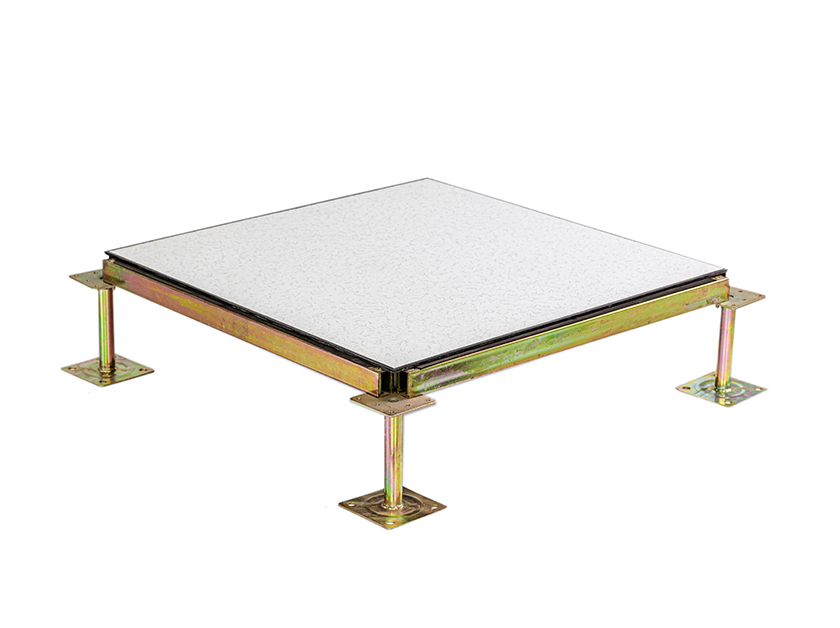
An anti-static raised access floor stands above the original floor, creating a gap for cables, air flow, and other utilities. The panels in this system use anti-static flooring materials like high-pressure laminate (HPL), PVC, or ceramic. You also find steel raised floor systems and calcium sulfate raised floor options. Each type offers unique benefits for static control, load capacity, and durability.
Tip: You can choose from several anti-static flooring types, such as HPL raised floor, calcium sulfate raised floor, and steel raised floor system. Each one helps you manage static electricity buildup and supports heavy equipment.
The modular design of raised access flooring lets you easily replace panels or adjust the layout. This flexibility makes anti-static raised access floor solutions ideal for environments where you need to change equipment or wiring often. Raised anti-static floor features include fire resistance, moisture protection, and strong load-bearing capacity.
How Anti-Static Raised Floor Works
You might wonder how anti-static raised access floor systems actually control static. The answer lies in the materials and structure. Anti-static flooring panels use conductive coatings or anti-static veneers. These layers create a controlled path for static electricity buildup to move safely to the ground. When you walk or move equipment, the static charge travels through the anti-static surface, down to the conductive core, and finally to a grounding point.
Here is a table that shows how different anti-static flooring types perform in static dissipation and other key features:
Floor Type | Material Description | ESD Resistance (Ω) | Key Features | Recommended Applications |
All-Steel Anti-Static | High-strength steel with PVC or HPL surface | 10⁶ - 10⁹ | Durable, fire-resistant, excellent static dissipation | Data centers, server rooms, cleanrooms |
Calcium Sulfate Anti-Static | High-density calcium sulfate core, conductive top | 10⁶ - 10⁹ | Eco-friendly, high load, fire-resistant | High-end data centers, finance, government |
Aluminum Anti-Static | Die-cast aluminum alloy | Superior ESD performance | Lightweight, corrosion-resistant, fire-resistant | Cleanrooms, aerospace, military, data centers |
PVC Anti-Static | High-density PVC resin, conductive network | 10⁶ - 10⁹ | Slip-resistant, permanent anti-static | Hospitals, electronics, labs |
Ceramic Anti-Static | Ceramic stoneware with steel or calcium sulfate | 10⁶ - 10⁹ | Durable, abrasion-resistant, fire-resistant | Offices, control rooms, cleanrooms |
You can see that anti-static raised floor panels maintain ESD resistance between 10⁶ and 10⁹ ohms. This range meets international standards for static dissipation. The anti-static flooring system keeps static under control, even when you have heavy equipment or high foot traffic.
Anti-static raised access floor systems also meet strict industry standards. Manufacturers test these floors for load capacity, fire resistance, and moisture protection. For example, you get static concentrated load ratings up to 565kg, ultimate loads of 18.36kN, and rolling loads up to 4.45kN. These numbers mean your anti-static flooring can support server cabinets, UPS systems, and other heavy gear without losing performance.
Note:Anti-static raised access floor panels often use a high-strength calcium sulfate board as the core, with an anti-static HPL surface and galvanized steel bottom. PVC anti-static edge trim protects all four sides, ensuring long-term durability and static control.
You benefit from the modular design of raised access flooring, which allows for easy cable management and underfloor ventilation. This setup helps you keep your data center or electronics lab organized and cool. The anti-static access floor system also provides a safe environment by reducing the risk of electrostatic discharge and static electricity buildup.
When you choose anti-static raised floor solutions, you protect your equipment, data, and staff from the dangers of static. You also meet the safety and performance requirements set by standards like CISCA, PSA MOB PF2, and ASTM E84-14. These certifications give you confidence in the reliability and effectiveness of your anti-static flooring.
Anti-Static Flooring Materials & Structure

PVC and Ceramic Surfaces
You often see anti-static flooring made with PVC or ceramic surfaces. PVC anti-static flooring uses a network of electrostatic particles inside the PVC resin. This structure helps you control static and makes the floor decorative and easy to clean. Ceramic anti-static flooring uses ceramic tiles mixed with anti-static powder. These tiles give you stable resistance and work well in areas where you need both durability and static control.
A technical study shows that when you treat PVC surfaces with ceramic dielectric plasma, the surface roughness increases, which improves static reduction. The chart below shows how the roughness of PVC changes with different treatments:

This means you get better static dissipation without losing the strength of the flooring. Ceramic surfaces also provide stable resistance between 1.0 x 10^6 and 1.0 x 10^9 ohms, making them reliable for anti-static flooring.
Steel and Anti-Static Calcium Sulfate Raised Access Flooring
Steel and anti-static calcium sulfate raised access flooring give you strong support and excellent static control. Steel raised floor systems offer high strength, fireproofing, and moisture resistance. You can use them in places with heavy equipment. Anti-static calcium sulfate raised access flooring uses a core reinforced with plant fiber. This material is environmentally friendly, fireproof, and has high strength. It is the most widely used anti-static flooring in developed regions.
You can choose between conductive and dissipative flooring. Conductive flooring, like carbon-infused vinyl or steel, quickly removes static charges. Dissipative flooring, such as anti-static calcium sulfate raised access flooring, controls static at a slower, safer rate. Both types protect your sensitive equipment from static discharge.
Here is a table comparing the durability and performance of common anti-static flooring materials:
Material Type | Durability Features | Performance Highlights |
Anti-static Tile (Ceramic) | Stable resistance, easy installation | Popular, stable resistance |
Steel | High strength, waterproof, fireproof | Suitable for high bearing requirements |
PVC | Decorative, anti-static function | Used in telecom, electronics, clean rooms |
Calcium Sulfate | Fireproof, high strength, eco-friendly | Most widely used in developed regions |
Conductive Coatings and Rubber Edges
You get even better static control with conductive coatings and rubber edges. Conductive coatings use special fillers to lower surface resistivity, helping static charges move quickly to the ground. Conductive rubber edges protect the sides of each floor panel and improve static dissipation. These edges use highly electro-conductive carbon black, which gives you fast charge removal and strong durability.
Note: Conductive rubber edges can reach a surface resistivity of 65×10^3 Ω/□ and dissipate static in just 0.0000057 seconds. This means your anti-static flooring stays safe and effective, even in high-traffic areas.
When you choose anti-static flooring with these features, you create a safer, more reliable environment for your equipment and staff. You also make cleaning and maintenance easier, since these materials resist wear and keep their anti-static properties over time.
Anti-Static Raised Access Floor Applications

Data Centers and IT Rooms
You depend on anti-static raised floor systems to protect your data centers and server rooms. These environments require strict control of static to prevent damage to sensitive electronic equipment. Anti-static panels help you avoid electrostatic discharge, which can harm servers and cause data loss. You also benefit from improved cable management and cooling, which keeps your infrastructure running smoothly.
Aspect | Evidence Summary |
Market Drivers | Safety regulations and sustainability increase demand for anti-static floors. |
Anti-Static Importance | Panels prevent static discharge, protecting sensitive electronic equipment. |
Key Application Segments | Data centers lead in usage due to rapid data growth and infrastructure needs. |
IT & Telecommunications | Largest sector, needing efficient cabling and cooling supported by raised floors. |
Functional Benefits | Raised floors improve cabling, cooling, and flexible infrastructure in data centers. |
Laboratory tests confirm the performance of anti-static flooring in these spaces:
Electrical resistance to ground stays below 1.0 x 10^9 ohms, meeting ANSI/ESD S20.20 and IEC 61340-5-1 standards.
Charge generation tests show personnel with ESD footwear generate less than 100 volts.
Conductive and static dissipative flooring reduce static charge generation, with a low chance of exceeding 500 volts.
Minimum resistance values protect you and your equipment, following standards like NFPA and UL 779.
ASHRAE research shows static control flooring works even in low humidity and with different footwear.
Chemical and Manufacturing Facilities
You face unique challenges in chemical plants and manufacturing sites. Static can cause fires, explosions, or equipment failure. Anti-static raised floor systems help you manage these risks. The flooring grounds static charges, protecting microchips and circuit boards in your control rooms. You also gain better cable organization, easier maintenance, and improved air flow for your infrastructure.
In these environments, anti-static floors reduce downtime and prevent costly system failures. You keep your operations safe and efficient by choosing the right floor for your needs.
Other Sensitive Environments
You find anti-static raised floors in many sensitive locations. Modern offices, electronics manufacturing, pharmaceutical cleanrooms, medical device plants, warehouses, and laboratories all use these systems. The anti-static floor prevents static buildup that attracts dust or causes equipment failure. You maintain a controlled environment and protect your data and devices.
Anti-static floors use conductive materials and copper grids to ground static safely. Testing standards like BS EN 61340-5-1 ensure the floor meets safety requirements. You create a safer workplace and reduce the risk of static-related incidents by installing anti-static raised floors in your facility.
Choosing Anti-Static Access Floor Systems
Compliance and Safety
You need to make sure your anti-static flooring meets strict compliance and safety standards. These standards protect your equipment and staff from static and esd risks. Always check that your anti-static raised floor system follows guidelines like ANSI/ESD S20.20 and STM 7.1. These rules require the floor to have resistance to ground below 1.0 x 10^9 ohms. This level of control helps you prevent static discharge and keeps your workspace safe.
Here is a table showing key standards and what they mean for your anti-static flooring:
Regulatory Standard/Test Method | Description | Performance Criteria |
ANSI/ESD S20.20 | Electrical resistance and grounding for esd floors | Resistance < 1.0 x 10^9 ohms |
STM 7.1 | Floor resistance test with NFPA probes | Confirms consistent static control |
STM 97.1 | Person + footwear + flooring system test | Ensures safe static dissipation |
STM 97.2 | Voltage generation test | Voltage < 100 volts |
STM 4.1 | Mobile workstation grounding | Resistance < 1.0 x 10^9 ohms |
You should also plan for regular electrical testing. This helps you catch any drop in anti-static performance before it becomes a problem. Testing keeps your anti-static flooring system safe and reliable.
Load and Performance
You must consider load-bearing capabilities when choosing anti-static raised floor systems. Your flooring needs to support heavy equipment, racks, and furniture without losing static control. Each anti-static floor type offers different load-bearing strengths and esd resistance. For example, all-steel anti-static floors provide high load-bearing and meet international standards. Aluminum anti-static flooring can handle up to 1.5 tons per square meter, making it a high-performance solution for demanding spaces.
Here is a quick comparison of anti-static flooring options:
Floor Type | ESD Resistance (Ohms) | Key Performance Features | Suitable Applications |
All-Steel Anti-Static | High load-bearing, compliant with standards | Data centers, cleanrooms, aerospace centers | |
10⁶ - 10⁹ | Stable static control, good load-bearing capabilities | Sensitive environments | |
Aluminum Anti-Static | N/A | Superior esd performance, high load-bearing capabilities | Cleanrooms, military, data centers |
PVC Anti-Static | 10⁶ - 10⁹ | Consistent esd resistance | Server rooms, labs |
Ceramic Anti-Static | 10⁶ - 10⁹ | Permanent resistance, fire resistance | Offices, electronics manufacturing, telecom |
You should match the load-bearing needs of your space with the right anti-static flooring. Always check the esd resistance and make sure the floor can handle your equipment.
Maintenance Tips
You can extend the life of your anti-static flooring with proper care. Regular cleaning with approved agents keeps static and esd risks low. Schedule inspections to spot wear early. This helps you avoid sudden failures and keeps your anti-static floor working well.
Use cleaning products made for anti-static flooring.
Inspect the floor often for signs of damage or wear.
Replace damaged tiles quickly to keep static control strong.
Plan for periodic electrical testing after repairs.
A cleanroom case study showed that switching to seamless anti-static flooring reduced cleaning time by 30% and improved contamination control. You can achieve similar results by following best practices and keeping your anti-static flooring in top shape.
Tip: Always consult with experts before installation and choose materials that meet ISO and GMP standards for your anti-static flooring.
You need an anti-static raised floor to keep static under control in your facility. Static can damage sensitive equipment and create safety risks. When you choose the right floor, you protect your workspace from static buildup. You also improve reliability and reduce downtime. Static control matters in every environment with electronics. If you want the best results, consider an anti-static raised floor from HUATENG. You get proven static protection and a safer workplace.
FAQ
What is the main purpose of an anti-static raised floor?
You use an anti-static raised floor to control static electricity. This floor protects sensitive equipment from electrostatic discharge. It also helps you organize cables and improve airflow in your workspace.
How do you maintain an anti-static raised floor?
You should clean the floor with approved anti-static cleaners. Inspect panels for damage often. Replace any worn or broken tiles quickly. Regular maintenance keeps your anti-static raised floor effective.
Which materials work best for anti-static raised floors?
You can choose from hpl raised floor, calcium sulfate raised floor, or steel raised floor system. Each material offers strong static control and durability. Your choice depends on your load requirements and environment.
Tip:HPL surfaces resist scratches. Calcium sulfate cores offer eco-friendly strength. Steel systems support heavy equipment.
Where should you install anti-static raised floors?
You should install anti-static raised floors in data centers, server rooms, laboratories, and electronics manufacturing areas. These spaces need strict static control to protect equipment and ensure safety.
 CopyRight © 2026 - Changzhou Huateng Access Floor Co., LTDAll rights reserved